The Plants That Built America, and the Ones It Lost

The United States likes to tell its origin story through documents and battles. A more honest version runs through its fields and forests. The colonial economy was agricultural before it was anything else, and the country was built, financed, and occasionally embarrassed by a short list of species. For the 250th, here is the natural ledger: what did the work, what did not survive it, and a few entries the official story prefers to leave in the footnotes.
The plants that built it
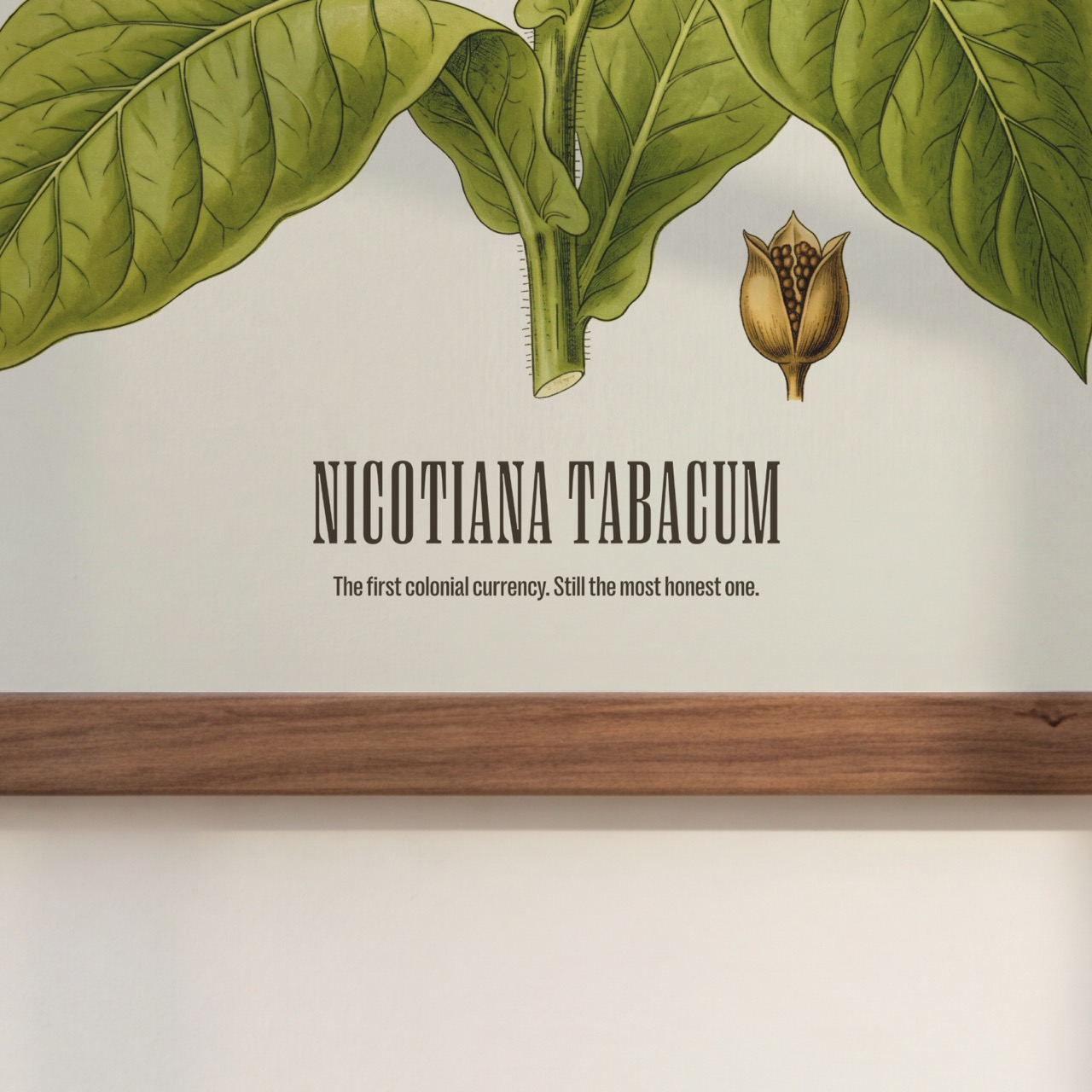
Money first. For nearly two centuries the currency of the Chesapeake was tobacco. Salaries, fines, taxes, and the “tobacco brides” (Englishwomen shipped to Virginia and paid for in 150-pound bales) were all denominated in cured leaf. Tobacco notes, paper receipts backed by certified hogsheads in a warehouse, circulated as bank notes. Every currency since has promised something it cannot quite deliver. Tobacco told you exactly what it would do to you, and then did it. The Dutch had already staked real houses on a single virus-streaked tulip and lost; tobacco at least made good on the threat.
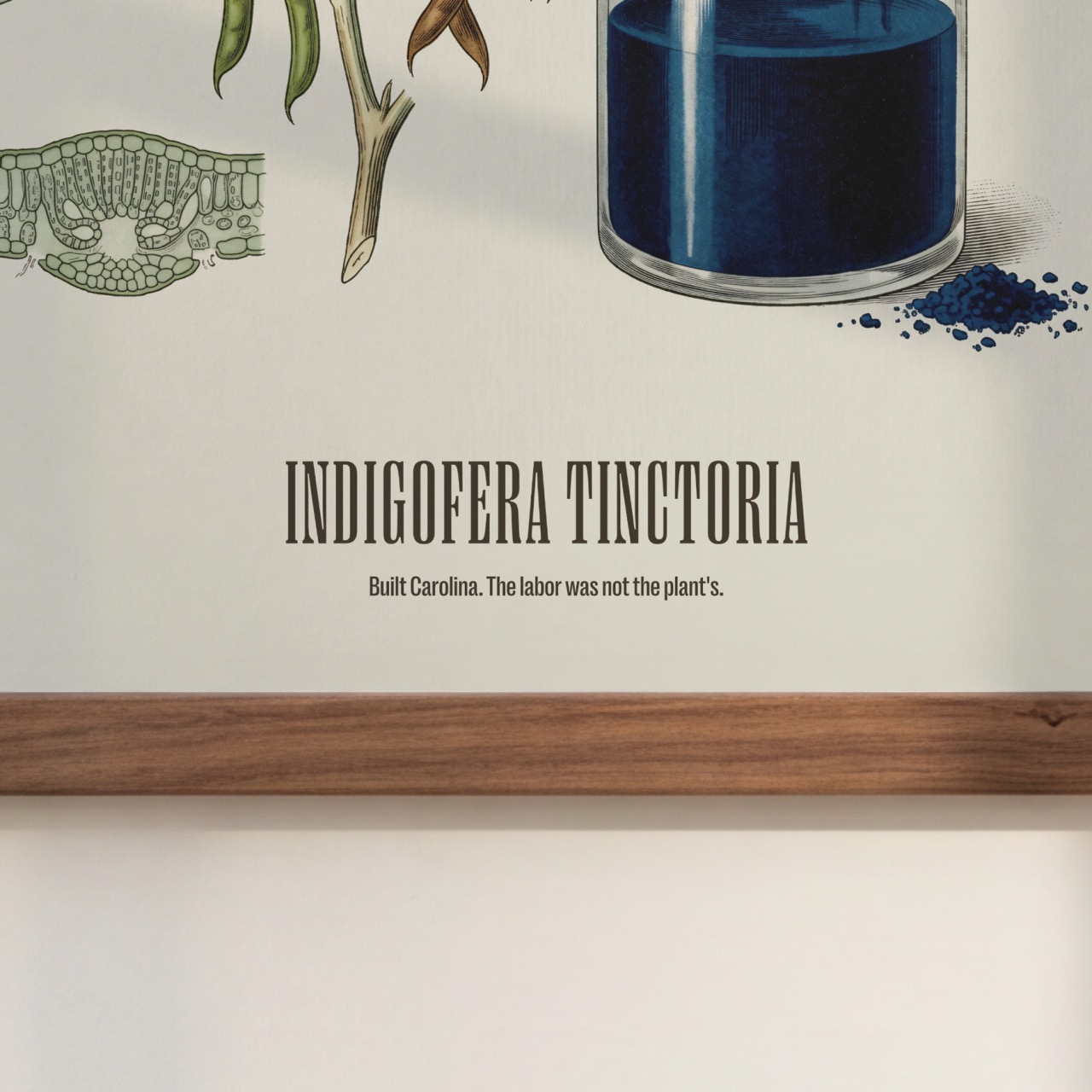
Indigo came next. By the 1740s it was the Carolinas’ second cash crop, after rice, and a deep blue dye prized in every European court. The textbooks credit Eliza Lucas Pinckney, who took over her family’s South Carolina plantations at sixteen and spent the next several years proving the crop could be grown and processed there. They are quieter about the enslaved West Africans whose technical knowledge of indigo cultivation and fermentation made the industry possible, and whose hands did the work. The plant is beautiful. The accounting is not.
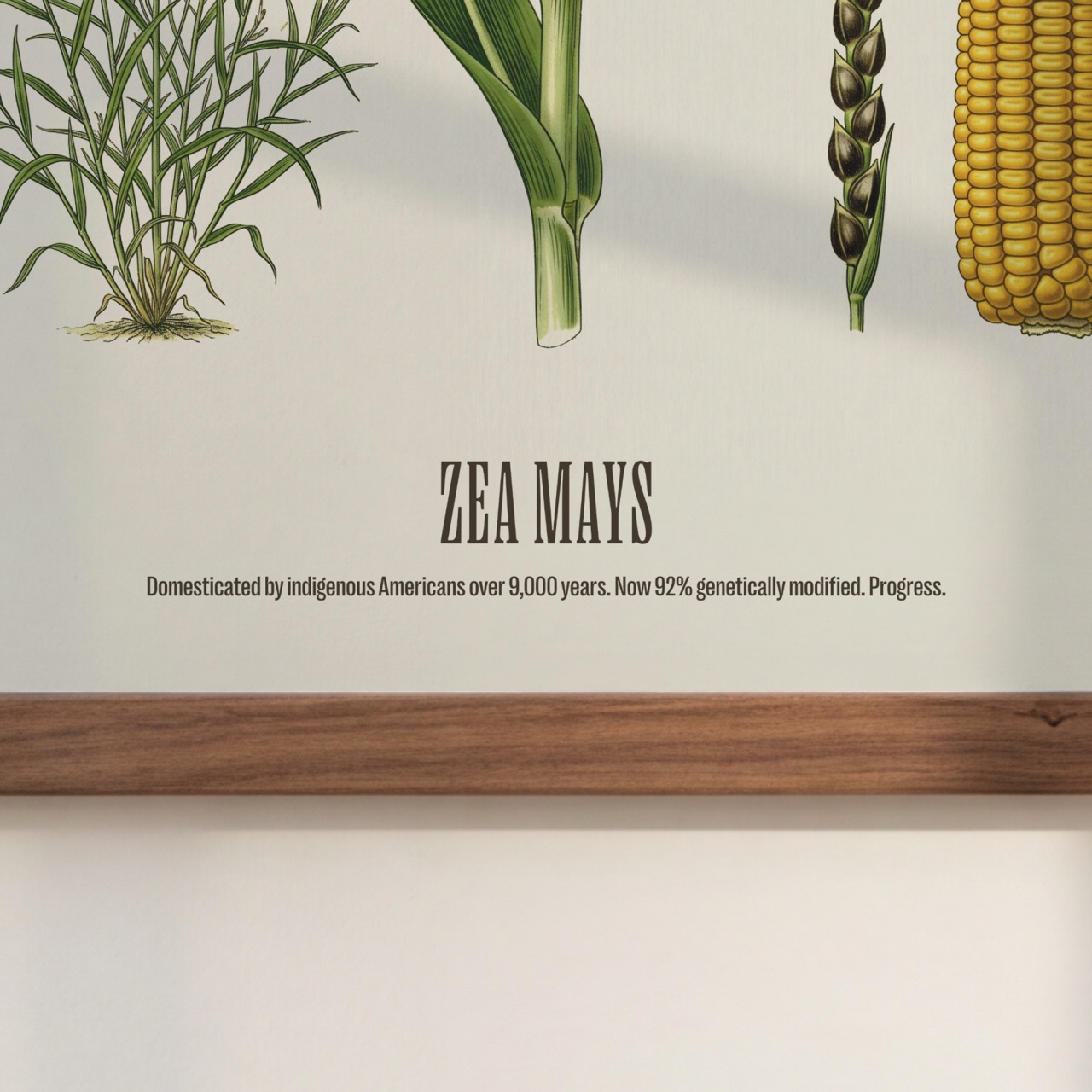
Then the crop that predates all of it. Maize is the botanical engine of the Americas, the product of more than nine thousand years of careful selection by Indigenous farmers who turned a five-centimeter wild grass called teosinte into the staple of a hemisphere. It is one of the great human achievements. It is also now, in the United States, about 92 percent genetically modified.
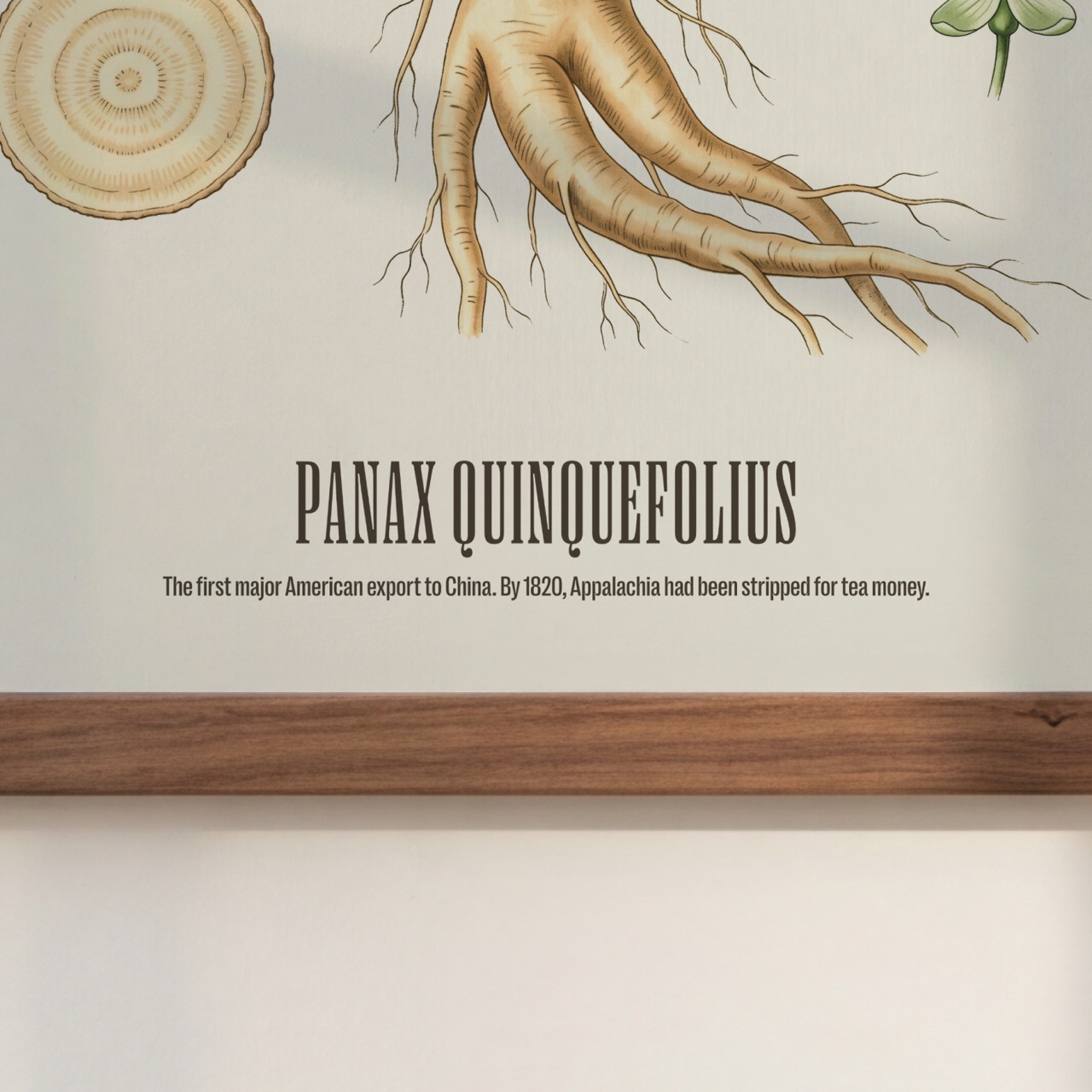
The China trade ran on a root. American ginseng financed the young republic’s appetite for tea, silk, and porcelain, with ships leaving for Canton loaded with it. By 1820 the wild populations were collapsing across the eastern range, and the species is now listed as endangered or threatened in most states where it once grew. The republic paid for its luxuries by quietly mining its own forests.
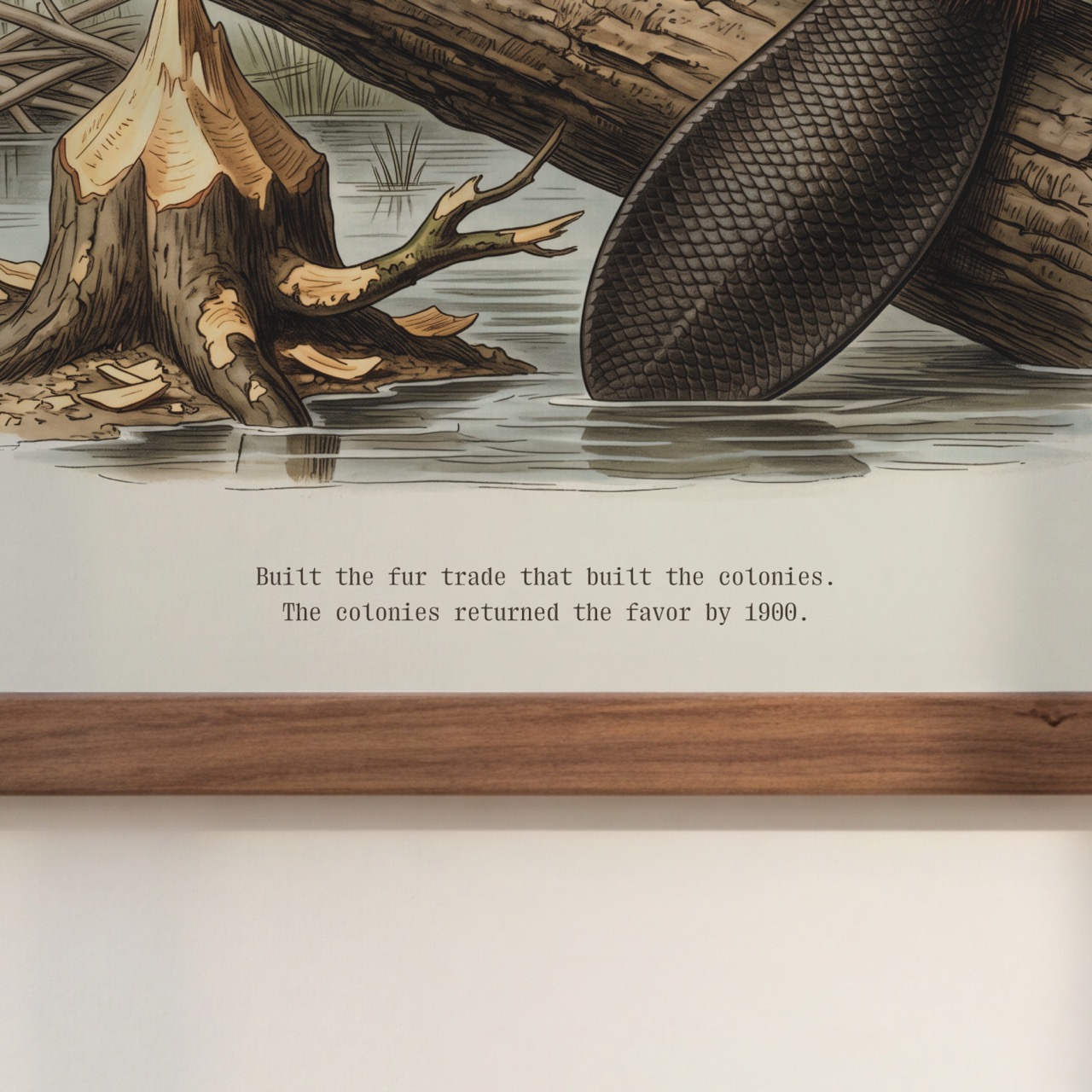
So did the fur trade. Castor canadensis, the beaver, powered the Hudson’s Bay Company, the Astor fortune, and a good deal of the French and Indian War, all because European men wanted felt hats. By 1900 the animal had been trapped to the brink of extinction across most of its range. The felt hat, by then, was out of fashion. The continent’s most industrious engineer was nearly erased by a millinery trend.
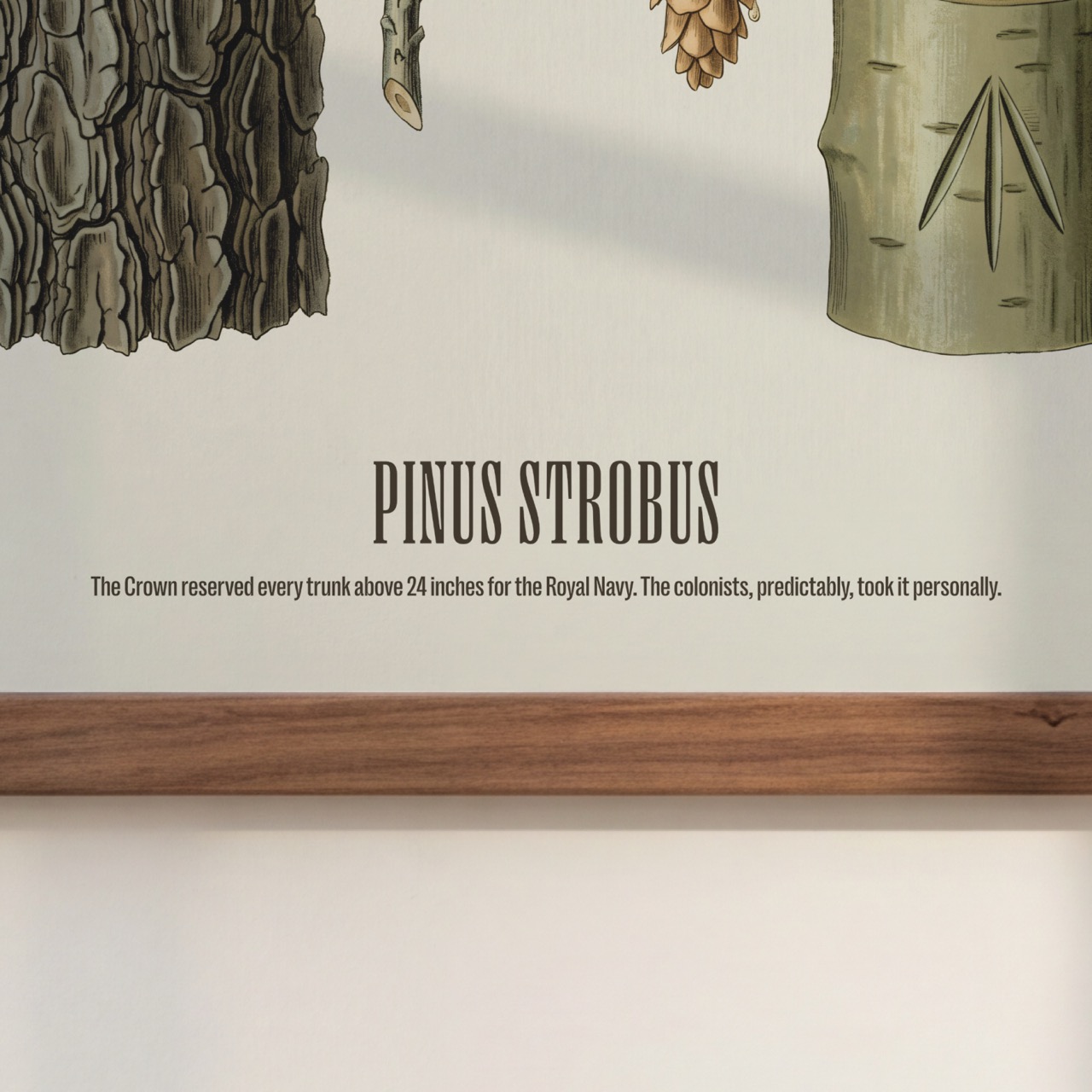
Some plants built the revolution more directly. The Crown reserved the tallest Eastern white pines for Royal Navy masts, blazing a “broad arrow” into the bark of any tree it claimed. New England millers, who needed those same trees, took it personally. The Pine Tree Riot of 1772, three years before Lexington, ended with New Hampshire colonists beating a royal sheriff with switches. The white pine was on the Bunker Hill flag for a reason.
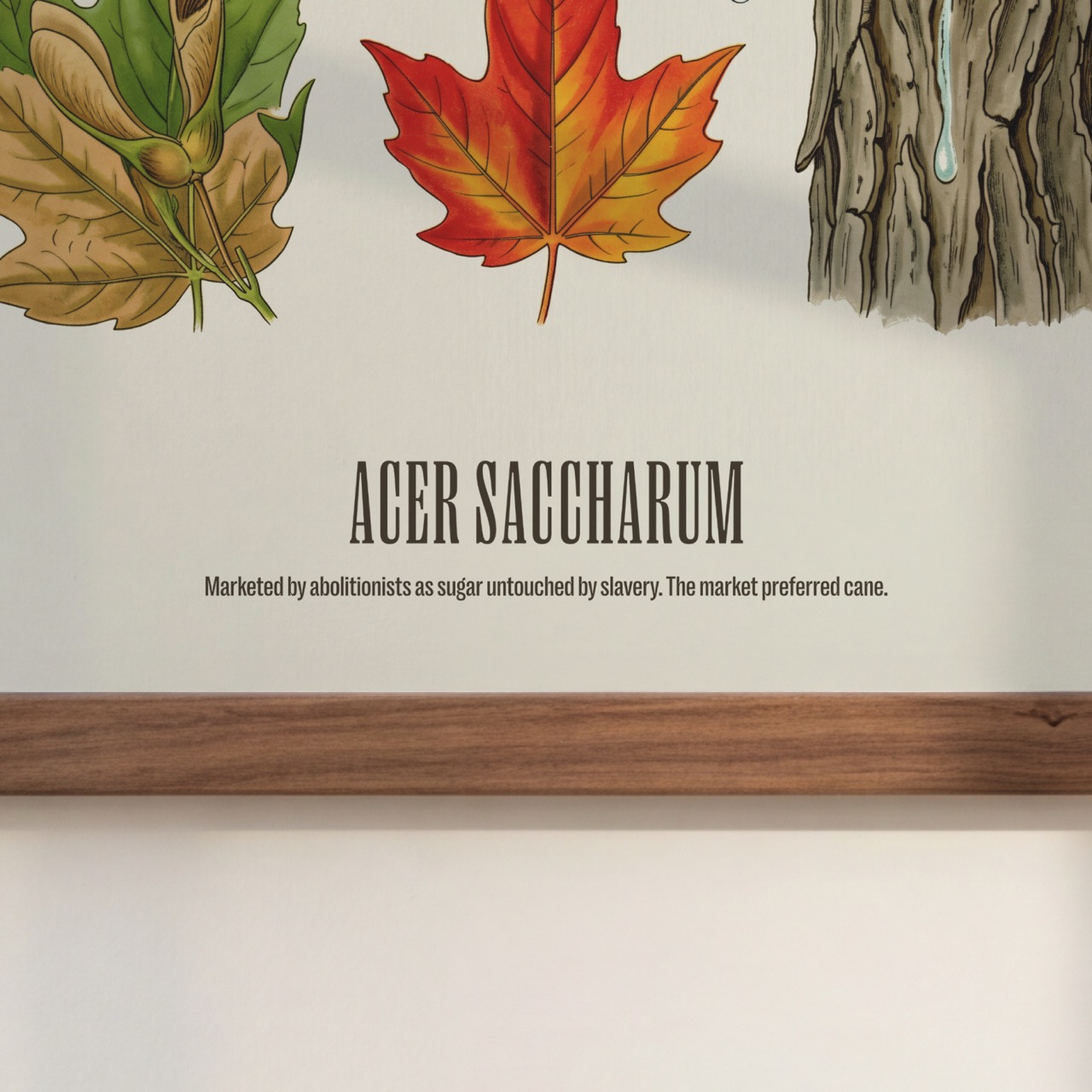
And one plant tried to fight slavery and lost on price. In the 1790s Benjamin Rush and others promoted maple sugar as “free sugar, untainted by blood,” a domestic alternative to cane harvested by enslaved people in the Caribbean. Thomas Jefferson planted maple groves at Monticello. The marketing was sharp. The market was sharper: cane was cheaper, and the experiment quietly collapsed. The tree stayed, and now produces a polite breakfast condiment.
The plants it lost
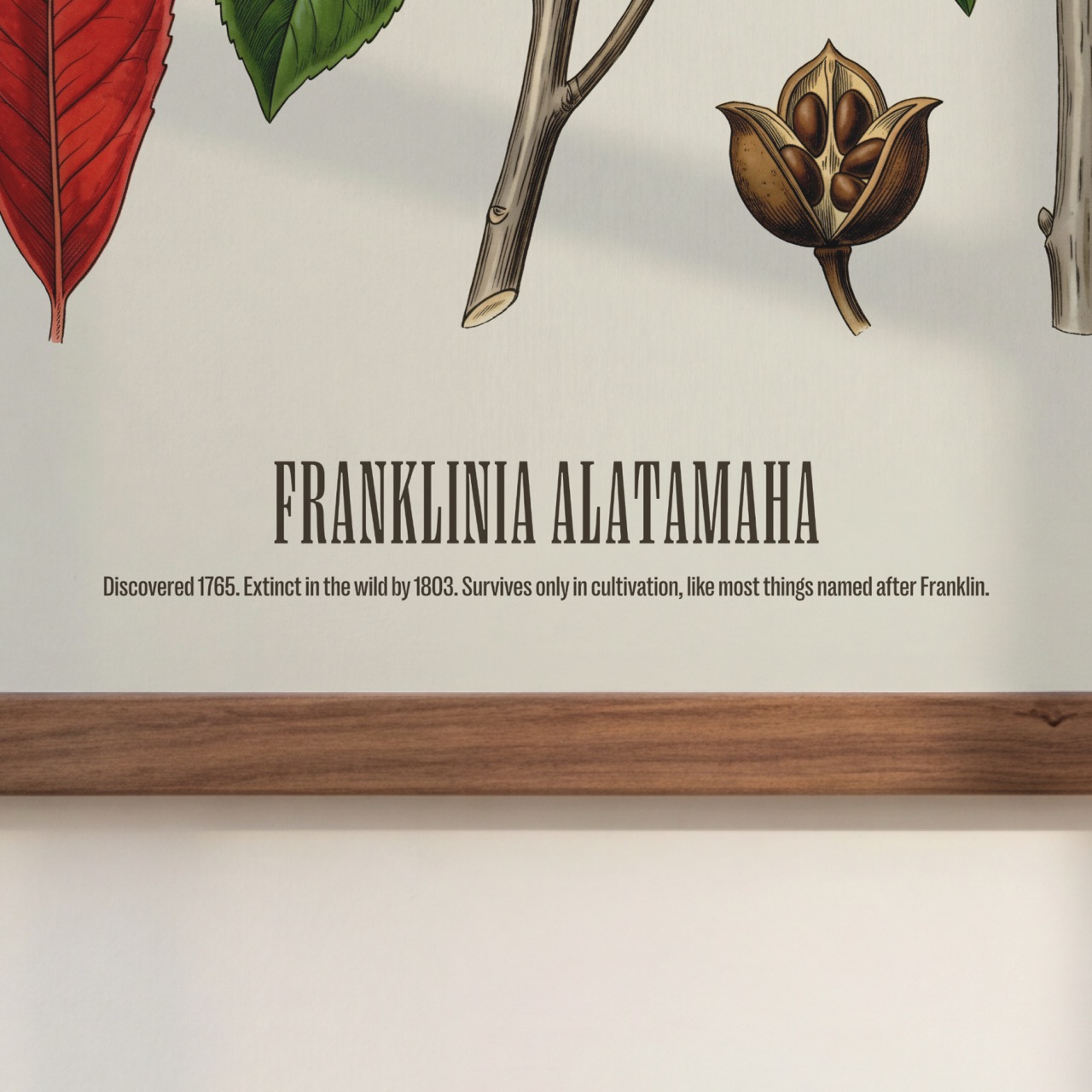
Not everything survived the country it helped define. The Franklin tree, Franklinia alatamaha, was found along a Georgia river in 1765 and named for Benjamin Franklin. It went extinct in the wild by 1803 and survives today only in cultivation, kept alive in botanical gardens and a handful of private collections. The riverbanks where it was found have gone quiet.
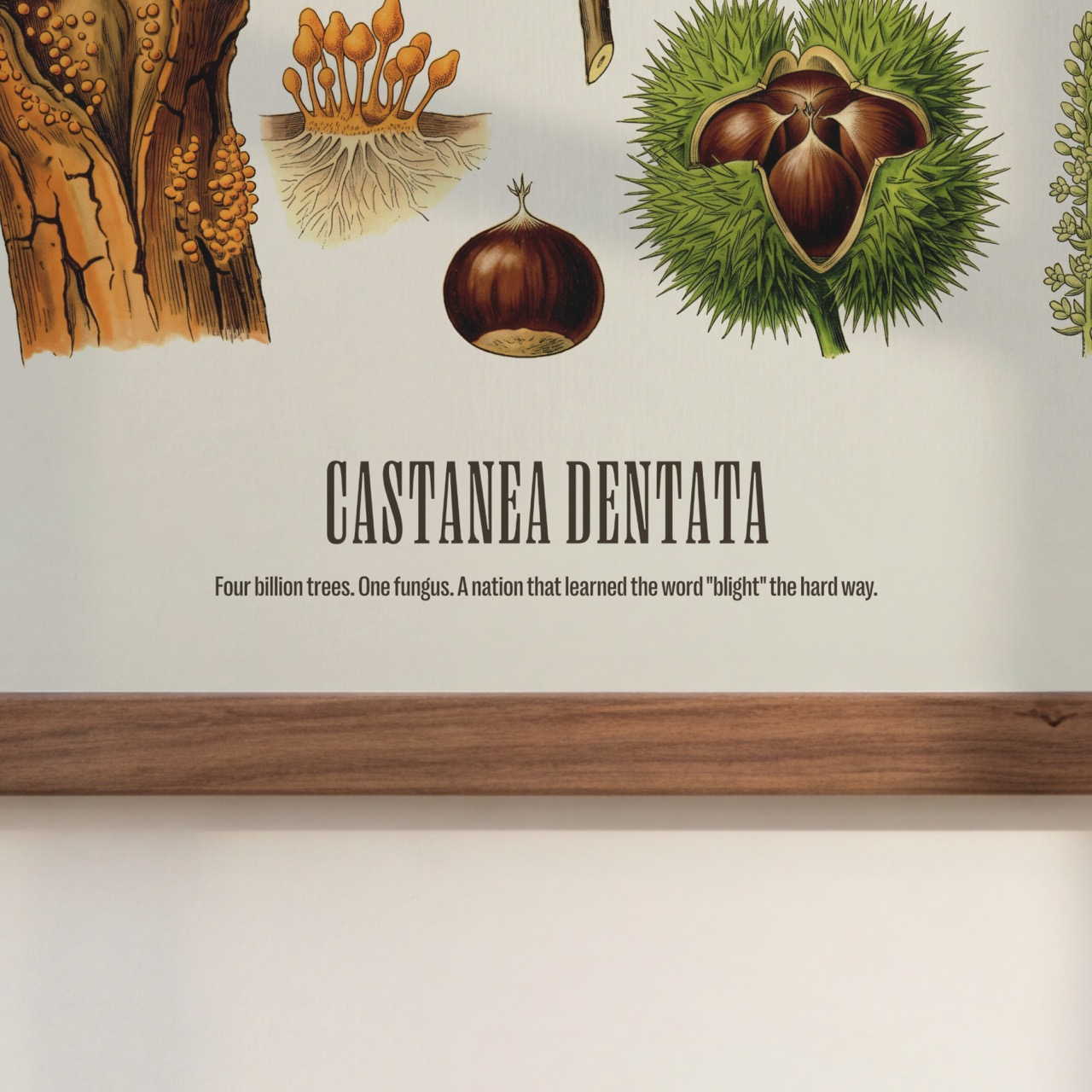
The American chestnut was the backbone of the eastern forest until an accidentally imported Asian fungus, Cryphonectria parasitica, killed nearly all of them by the middle of the next century. The remaining stumps still send up shoots that die before they can flower. It is arguably the largest ecological disaster in American history, and almost nobody can name it.
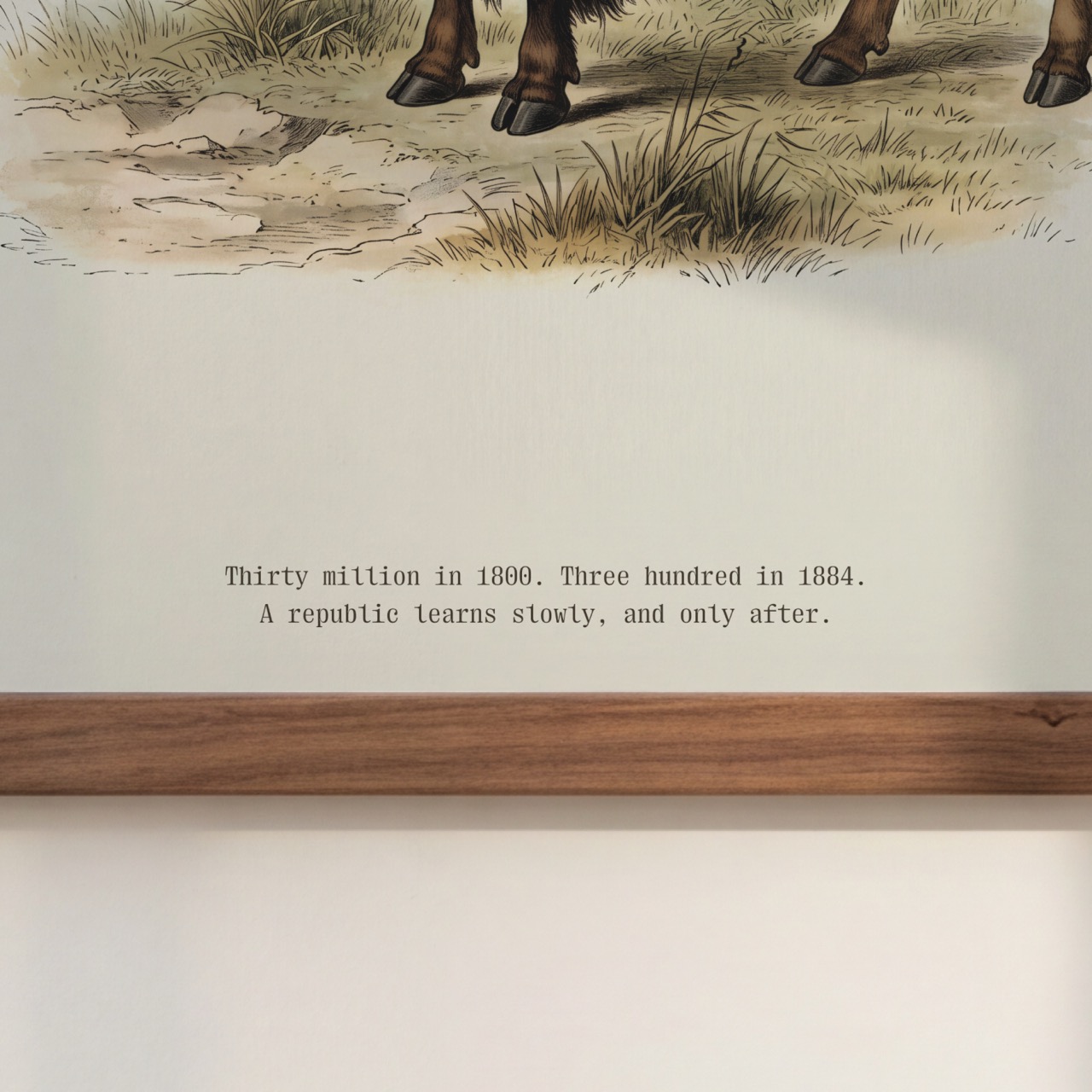
The bison came closest of all. By the late 1880s fewer than a thousand wild animals remained, the low point of a slaughter bound up with the dispossession of the Plains nations. A famous photograph of the period shows a mountain of skulls awaiting the fertilizer plants. The American conservation movement was built on the lesson the buffalo paid for.
The footnotes
The triumphant version leaves things out, and the margins are where this press tends to look.
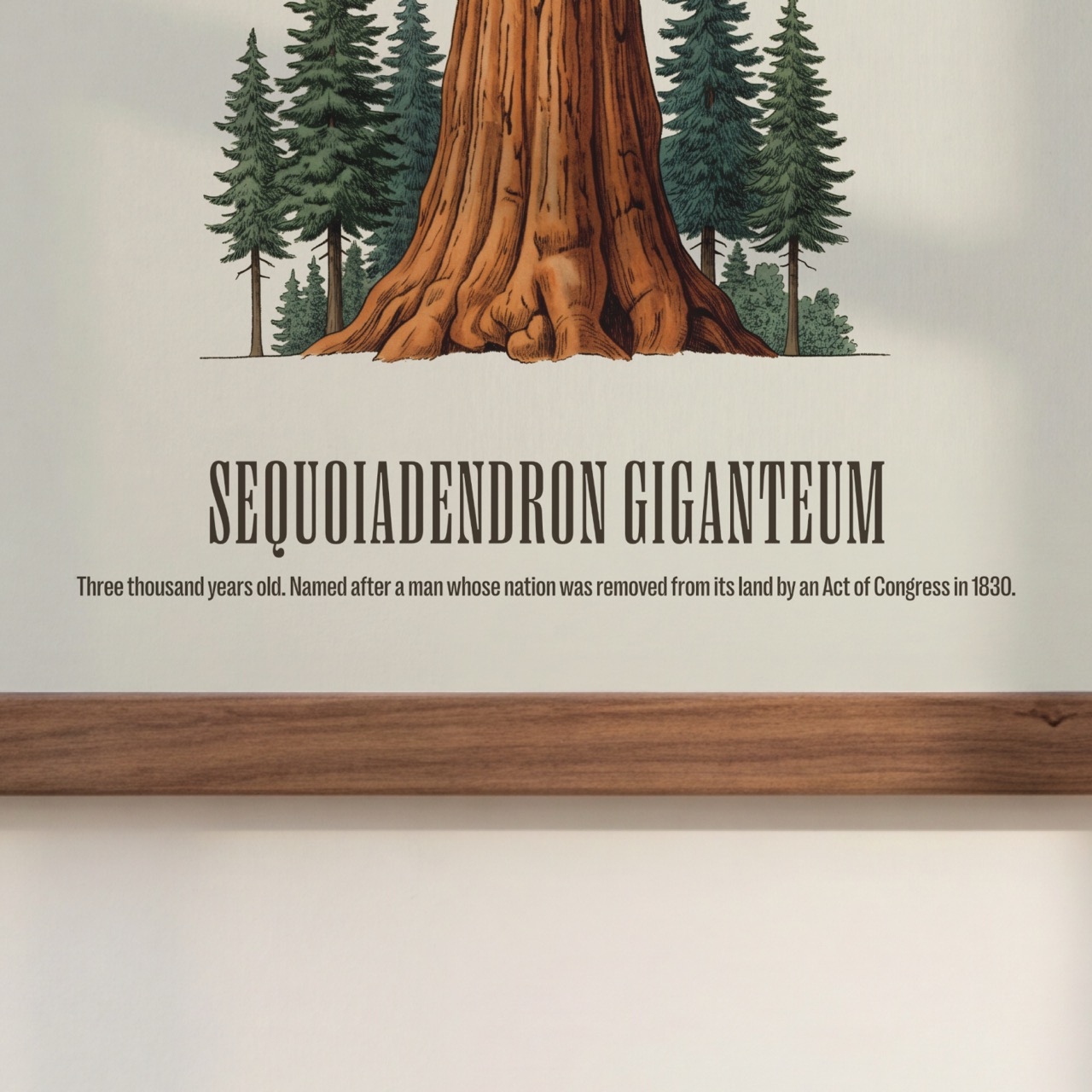
The giant sequoia, the largest living thing on the continent, carries the name Sequoiadendron giganteum, traditionally honoring Sequoyah, the Cherokee polymath who devised his nation’s writing system. The tree has stood for three thousand years. The nation of the man it honors was forced off its ancestral land by an Act of Congress in 1830.
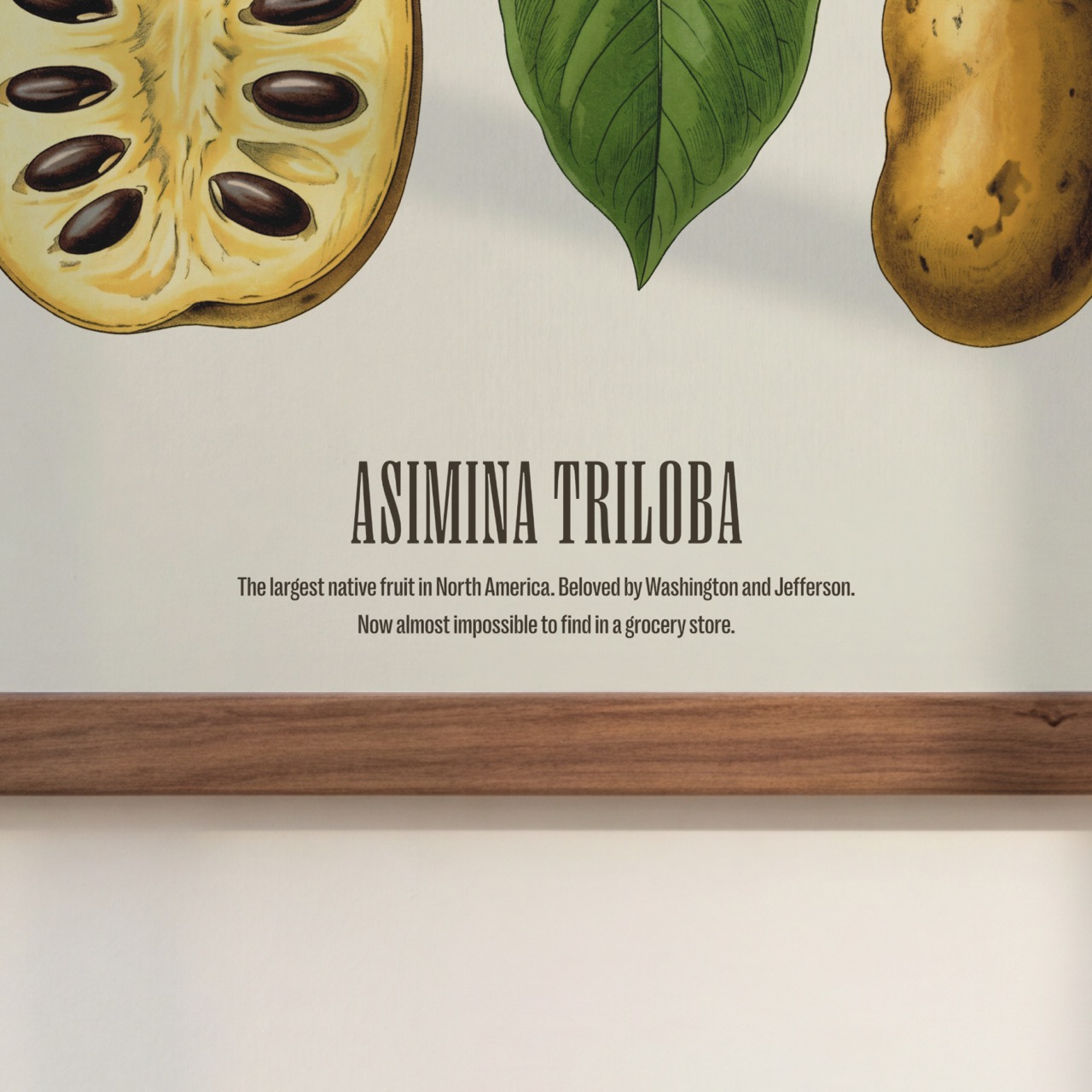
The pawpaw, the largest fruit native to North America, was a genuine American institution. Washington reportedly ate it chilled, and Jefferson planted it at Monticello. It is also, despite all of that, nearly impossible to find in a grocery store today.
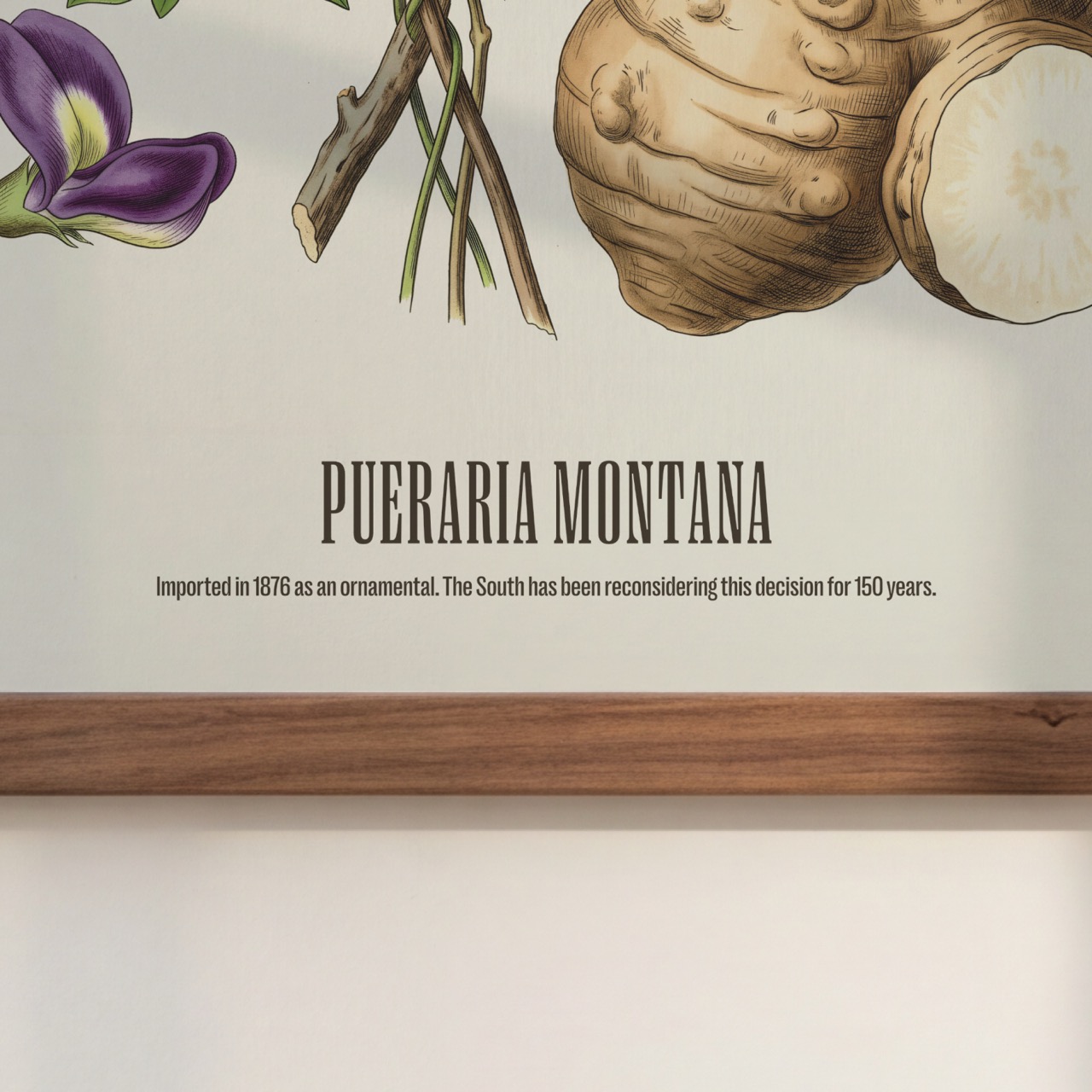
And the cautionary one. Kudzu came over as an ornamental for the 1876 Centennial Exhibition, the country’s hundredth-birthday party, and was later planted across the South by the million to hold down eroding soil. It held down a good deal more. A hundred and fifty years after that first polite garden display, the South is still pulling it off the fence posts.
The ledger
Read end to end, the country’s natural record looks less like a garden and more like an account book: what was grown, what was spent, what was owed, and what quietly went missing.